


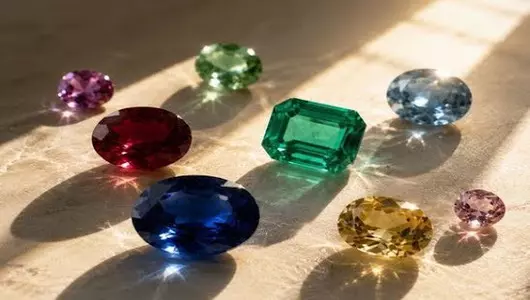
The decision to invest in a high-level certificate is never about price alone. It is about three specific qualities, any one of which, when present, changes the documentation a stone requires.
Exceptional colour. Rare origin. No treatment in a category where treatment is the global norm. Understanding these three triggers is the difference between informed buying and buying blind.
In Part 1 of this series, we established that the question most buyers ask — which certificate is most prestigious and reliable? — is the wrong question. The right question is: what does this particular stone actually need confirmed?
The answer comes down to three things. In my experience — 30 years of handling gemstones for customers across India and the UAE — the trigger for a high value gemstone certificate is never price alone. It is a combination of three qualities, and it applies when any one of them is present.
When is a High Value Gemstone Certificate Necessary?
A High Value Certificate is not required for every gemstone. It is essential only when a stone carries characteristics that significantly affect its market identity, value, or rarity. These three conditions determine when such a certification is justified:
1. Exceptional colour
Certain colour grades in coloured gemstones carry enormous value, but only if they are verified by a laboratory, whose colour terminology is internationally recognised.
A Blue Sapphire, described as ‘Royal Blue’ or ‘Cornflower Blue’ on a GemResearch Swiss (GRS) Lab certificate, commands a different price than the same stone with a generic colour description on a local lab report. The same applies to ‘Pigeon Blood Red’ for rubies and ‘Vivid Green’ for emeralds. These are not just beautiful descriptions; they are internationally accepted colour grades that move markets.
If a stone has one of them, it needs a certificate from a laboratory whose colour terminology the market trusts. A local lab report, however credible for routine purposes, cannot confer that grade.
2. Exceptional or rare origin
Origin is not always relevant. A Sri Lankan Yellow Sapphire of good quality does not need a Swiss lab certificate simply because it is from Sri Lanka — most fine Yellow Sapphires are. But a Kashmir Blue Sapphire is a different matter entirely.
Kashmir production essentially ceased decades ago. A genuine cornflower blue Kashmir sapphire is among the rarest stones in the world, and its origin must be documented by a top-tier laboratory for the claim to carry any market weight. The same principle applies to Burmese Ruby, Paraíba tourmaline or a Colombian emerald — especially when the gem is untreated or falls into a high-value category where treatment is the global norm.
When origin is the basis of the value claim, the certificate is the only thing that substantiates it. For instance, a Colombian emerald certificate authenticating an emerald originates from Colombia.
3. No treatment where treatment is the norm
This is the one most buyers miss entirely.
In the coloured gemstone world, treatment is standard practice. Over 95% of Blue Sapphires on the market are heat-treated. Most Rubies have undergone some form of enhancement. Most Emeralds have been oiled. This is accepted, disclosed, and does not make a stone inferior. But an untreated precious stone in a category where treatment is universal is genuinely rare — and that rarity has real value.
A one-carat Colombian Emerald, untreated or with only insignificant clarity enhancement, at USD 2,000 – USD 3,000 is not an expensive stone, but it is an exceptional one. This is exactly where a high value gemstone certificate becomes essential, because without it, the stone’s exceptional nature is invisible in the resale or insurance market.
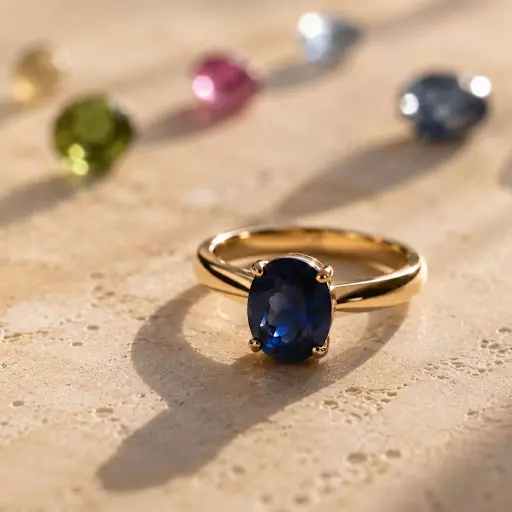
For Most Stones, a High Value Certificate Is Not Needed
For the vast majority of astrological gemstone purchases, none of these three triggers are present — and a certificate from a credible local or regional laboratory is exactly the right document. Part 4 covers this in full, along with the complete laboratory comparison and stone-by-stone reference guide.
goes deeper into astrological gemstones. Specifically, what the Jyotish tradition actually requires from a certificate, and where, even the finest laboratories, have a known limitation that every astrological gemstone buyer should understand.
Why does colour grade matter so much for a High Value Gemstone Certificate?
Because internationally recognised colour grades — ‘Pigeon Blood Red’ for rubies, ‘Royal Blue’ or ‘Cornflower Blue’ for sapphires, ‘Vivid Green’ for emeralds— are market-accepted value benchmarks. They only carry weight when they appear on a certificate from a laboratory the market trusts. The same stone described generically on a local report will not command the same price.
Does origin always matter for certification?
No. Origin matters when it is the basis of a significant value claim — Kashmir sapphires, Burmese rubies, Colombian emeralds and Paraíba tourmaline. For stones where origin is typical rather than exceptional, a credible local or regional certificate is sufficient.
What does ‘untreated’ actually mean, and why does it matter?
An untreated gemstone has not been subjected to any process designed to improve its appearance — no heat, no oiling, no fracture filling, no chemical enhancement. In categories where treatment is the global norm, an untreated stone is genuinely rare. That rarity has real value, but only if it is documented by a laboratory whose treatment disclosure methodology is accepted by the market.
Why is a certificate for a Colombian Emerald, Burmese Ruby, Kashmir Sapphire, Paraíba Tourmaline (and other similar stones) important?
A Colombian emerald certificate is important because Colombian origin is one of the strongest value drivers in emeralds globally. Similarly, for Burmese Rubies (Pigeon blood red or otherwise), Kashmir Sapphires(Cornflower blue or otherwise) and Paraíba tourmalines – the origin directly impacts pricing. Only a reliable laboratory report can authenticate it and protect long-term resale and insurance value.
Which gemstone certificate do I need? A Practical Laboratory Guide
Quick Summary Parts 1 to 3 covered the philosophy, the three triggers, and what the Jyotish tradition requires. This final part gives you the
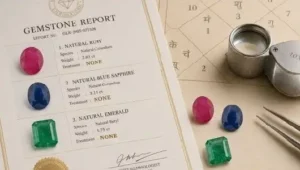
Untreated Gemstones for Astrology: What a Certificate Must Prove
Quick Summary The Jyotish tradition is clear: treated stones are not acceptable for astrological purposes. The certificate’s treatment disclosure is the single most critical piece
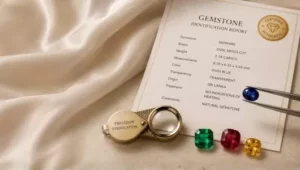
Gemstone Certificate Dubai: Why the Right Certificate Matters
Quick Summary Not every gemstone needs a GIA or Swiss lab certificate. The right certificate depends not only on the price of the stone but
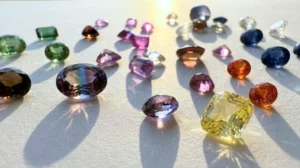
Astrologer vs Gemologist: Do You Need Both for Buying Gemstones?
Quick Summary An astrologer tells us which gemstone to wear based on our birth chart and planetary period, while a gemologist verifies whether that stone